
Landscaping

ABOUT AWD LANDSCAPE SOLUTIONS
The most important characteristic of any subsurface drainage system is its ability to collect water from the surrounding soil. Pipe and stone systems have major limitations when compared to prefabricated drain systems. The open area in our prefabricated sheet & strip drains far exceed that of a perforated pipe.
In global urban development projects, SITEDRAIN™ Landscape is increasingly specified to replace traditional gravel drainage layers. Because these modern prefabricated drain systems are incredibly lightweight and thin, they significantly reduce the structural dead load on concrete slabs, allowing architects to design deeper soil profiles for intensive greening. Utilizing SITEDRAIN™ Landscape in these global projects ensures that excess rainwater from heavy storms is rapidly evacuated, preventing waterlogging and protecting the underlying waterproofing membrane. By choosing these engineered prefabricated drain systems over traditional heavy aggregates, developers can achieve sustainable, long-lasting rooftop gardens while optimizing structural efficiency.
For large-scale civil works and sports turf installations in Hong Kong and Macau, managing subsurface water is important to maintaining surface usability and preventing soil erosion, which is where SITEDRAIN™ Landscape excels. In projects like Cyberport and headquarter of Civil Engineering & Development Department, these high-flow prefabricated drain systems are installed directly beneath the turf or the bottom of planters or landscaping areas to intercept lateral water flow. Specifying SITEDRAIN™ Landscape in these demanding environments ensures that fine soil particles are filtered out while water enters the high-capacity core unimpeded, overcoming the common clogging issues associated with traditional pipe-and-stone setups. Ultimately, integrating these advanced prefabricated drain systems into global infrastructure designs guarantees reliable, long-term hydraulic performance under high compressive loads.

ABOUT AWD VRA SERIES
SITEDRAIN VRA products are a key component to a complete vegetative roof assembly system, allowing many flat or gently sloping roofs to be transformed into a beautiful, green paradise. Once barren, vacant, ecologically poor areas can be turned into an esthetically pleasing, ecologically sound, above ground space on new or existing structures.
Protecting the underlying Roofing membrane from root penetration and physical damage is paramount when installing a vegetative roof assembly system. Engineers specify SITEDRAIN™ Vegetative Roof Assembly (VRA) products directly above the insulation layer to provide a multi-functional barrier that manages water dynamics. The integrated Water Storage Core retains essential moisture to sustain the vegetation during dry spells, while simultaneously allowing excess stormwater to escape through the drainage channels during heavy downpours. To prevent fine soil particles from clogging this system, a high-quality Root barrier filter fabric is placed over the core, ensuring that Aeration to the plant roots is maintained. Properly coordinating the placement of the Waterproofing membrane, the insulation, and the SITEDRAIN™ VRA products is critical in various climates to prevent thermal bridging and ensure the long-term health of the rooftop vegetation.
Across large‑scale developments worldwide, success in vegetative roofing depends on how well the Water Storage core interacts with the root zone. A specialized Root barrier filter fabric plays a vital role, allowing water to pass freely while holding back soil to keep drainage pathways clear year after year. Without it, fine sediments would clog the Water Storage core, limit aeration and reducing plant vitality. In regions with sharp seasonal temperature swings, pairing high‑performance insulation beneath the Waterproofing membrane with SITEDRAIN™ VRA products helps stabilize building temperatures. By selecting the right grade of SITEDRAIN™ VRA products, contractors ensure that drainage, aeration, and thermal insulation work together seamlessly, protecting the Waterproofing membrane and supporting lush vegetation across global projects.

ABOUT GREENING SYSTEM
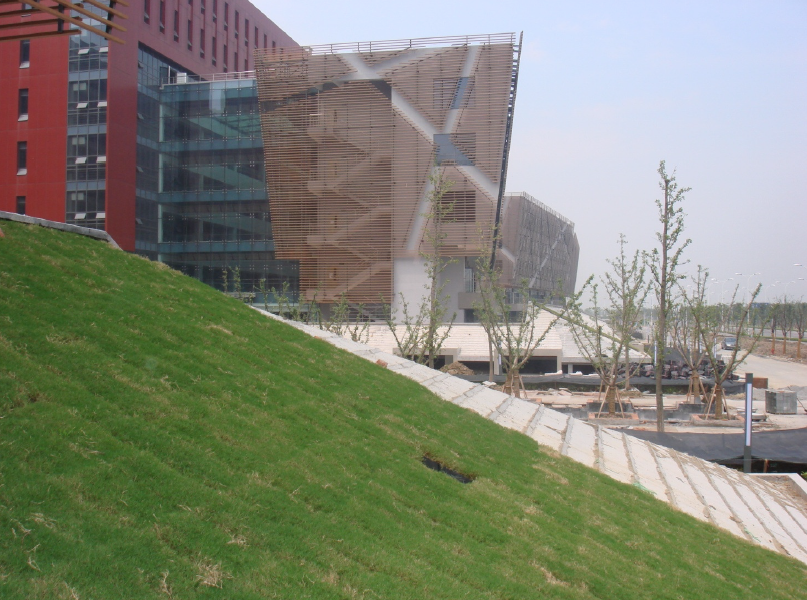
CMS GreenSlope System was successfully installed since 2002. During the past 8 years, our engineers continue to improve and develop new greening systems such as GreenRoof, GreenWall, etc. Cellular GreenPanel is made up of cellular sections. The vegetations are pre-grown before installation on site that reduce the time and cost of installation. Each GreenPanel can be pre-vegetated by your selected plants to give an instant green once you installed the GreenPanel. The cellular structure of the GreenPanel provides the best environment for plants in terms of both storage capacity of soil and water retention properties. Thanks for the excellence of both storage and water retention properties that the cost of watering was minimized.
From high‑density districts in commercial parks to eco‑districts in industrial gardens, specifying a modern Greening System is a key strategy for mitigating the urban heat island effect and managing stormwater. When designing a sustainable GreenRoof on flat or gently sloping commercial decks, utilizing the modular GreenPanel is highly advantageous because its pre-vegetated design allows for rapid installation and immediate green coverage. The exceptional water retention properties of the GreenPanel are particularly critical in regions with dry seasons or strict water-use regulations, as they significantly reduce the need for auxiliary irrigation. By integrating this advanced Greening System, developers can ensure that the GreenRoof remains healthy and resilient, leveraging the substrate's natural water retention properties to absorb heavy rainfall and reduce peak runoff loads on municipal drainage networks.
In tight urban spaces where ground area is scarce, a well‑designed GreenWall offers a smart way to improve air quality and elevate building aesthetics. Many designers link vertical installations with horizontal GreenRoof systems to form a continuous Greening System that maximizes ecological impact. On high‑rise facades, the lightweight GreenPanel structure provides secure mounting, easy upkeep, and even water distribution across the wall surface. By integrating the GreenPanel into a full Greening System, both vertical and horizontal surfaces benefit from optimized water retention, making this approach a cornerstone of sustainable design in modern global architecture.

ABOUT RAINWATER COLLECTION
& UTILIZATION SYSTEM
MEA rainwater collection and utilization system refers to the rainfall runoff collected on the hardened surface of buildings, roads, squares, etc., storage and purifying, providing rainwater recharge for greening, landscape water, washing and underground water sources.
In "sponge city" developments and sustainable urban planning, implementing a robust Rainwater Collection & Utilization System is essential for managing stormwater runoff in highly paved environments. Developers must specify these systems in arid or water-stressed regions to capture seasonal downpours, utilizing the stored water for urban greening and maintaining decorative landscape water features without drawing from municipal potable supplies. In Hong Kong and Macau, where severe aquifer depletion is a growing concern, directing treated runoff into rainwater recharge systems plays a vital role in restoring underground reserves. This approach helps replenish essential water sources, reduces the risk of land subsidence, and supports long‑term sustainability in urban and industrial zones.
To maximize the efficiency of a Rainwater Collection & Utilization System, engineers must conduct thorough soil permeability and filtration assessments before installation. For instance, when planning rainwater recharge initiatives near industrial zones, advanced multi-stage filtration is mandatory to prevent contaminants from polluting underground water sources. When properly treated, this harvested water serves as a reliable, cost-effective supply for large-scale commercial greening projects and municipal landscape water reservoirs. Ultimately, integrating a comprehensive Rainwater Collection & Utilization System that balances immediate reuse for greening and landscape water with long-term rainwater recharge into underground water sources with minimized or even non-irrigation is a cornerstone of resilient global infrastructure design.


ABOUT BENTOFIX® X SERIES
Naue’s Bentofix® X2 GCL was specified to provide a high-quality environmental barrier for the artificial lake. The Bentofix® X series features multi-component GCLs. These needle-punched, reinforced composites combine two durable geotextile outer layers and a uniform core of high-swelling powder sodium bentonite clay, as used in other Bentofix® products; but, with one key difference: an additional polyethylene coating is extruded onto the woven component side. The coating enhances the material’s internal shear resistance and barrier performance. It guards against desiccation and serves as a root barrier.
In global mining and landfill containment projects, especially on steep slopes, the Bentofix® X2 (Geosynthetic Clay Liner) GCL is highly valued for its superior shear strength and low permeability. The X series design is particularly crucial when the barrier is exposed to harsh weather before backfilling, as the extruded coating prevents the bentonite clay core from prematurely hydrating or drying out. Furthermore, the durability of the geotextile outer layers prevents installation damage from sharp aggregates. Unlike standard geosynthetic clay liners, these multi-component GCLs utilize their robust geotextile outer layers to lock the clay in place, ensuring that the bentonite clay remains evenly distributed even under high hydraulic heads and steep gradients.
For infrastructure projects adjacent to sensitive ecosystems or agricultural lands, specifying Bentofix® X2 GCL provides an effective root barrier that prevents root penetration from damaging the sealing layer. When dealing with highly aggressive or saline leachates, the X series offers an extra layer of protection due to the laminated HDPE coating acts as a physical shield, preventing chemical attack on the underlying bentonite clay. Engineers should select these advanced multi-component GCLs over traditional clay liners because the combination of the protective coating and the high-performance geotextile outer layers ensures long-term containment integrity. Besides, the self-sealing property of Bentofix® GCL also makes a liable barrier to prevent any potential leakage even having disturbance from growing tree roots. Ultimately, the unique barrier properties of the X series make Bentofix® X2 GCL a reliable choice for complex global environmental protection works where standard multi-component GCLs might face chemical or physical limitations.

ABOUT GREENROOF SYSTEM
CMSA Greenroof System is a thin composite layer composed of a rigid but flexible drainage core bonded with geotextile. The core provides aeration to the plants and allows CMSA Greenroof System to have a high water flow rate under high external compressive force. Water from rain or sprinkled water fills up the water storage cones of this drainage core and excess water is carried to the drainage outlets through holes (min 5mm dia) in the upper surface of the core.
CMSA Greenroof System continues to demonstrate its effectiveness in global construction projects by combining a rigid drainage core with a protective geotextile layer. This design not only supports plant growth but also ensures a high-water flow rate, allowing excess rainwater to be efficiently managed even under heavy loads. The integration of the drainage core and geotextile provides both structural stability and filtration, preventing soil particles from clogging the system while maintaining consistent water movement across the roof surface.
In addition, the CMSA Greenroof System is adaptable to diverse climates and building types, making it a versatile solution for sustainable urban development worldwide. Its rigid composition ensures durability in high‑rise applications, while the drainage core and geotextile combination enhances resilience against extreme weather. By maintaining a high water flow rate, the system reduces the risk of ponding and structural stress, ensuring long‑term performance. This balance of strength and efficiency makes the CMSA Greenroof System a trusted choice for architects and engineers seeking reliable green infrastructure solutions.

ABOUT METROPAVE GRASS & GRAVEL GRIDS
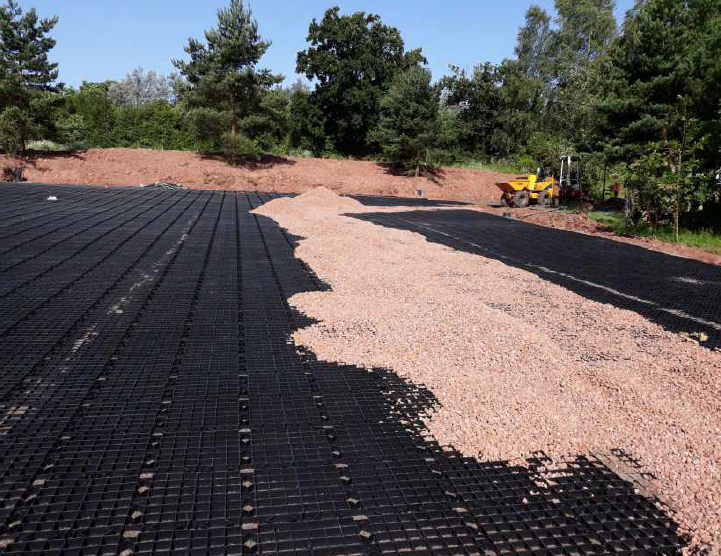
Made from 100% recycled materials, the MetroPave grids are modular units which work in conjunction with neighbouring units to create an exceptionally durable, permanently porous, high load bearing structure when infilled with either grass or natural aggregate.
The NAYLOR MetroPave Grass system builds on the strength of MetroPave grids, which are manufactured from 100% recycled materials to deliver sustainable and durable ground reinforcement. When combined with Gravel Grids, the structure provides a stable, load‑bearing surface that remains permanently porous, allowing natural drainage and reducing surface water buildup. This makes the solution ideal for car parks, access roads, and landscaped areas where both strength and permeability are required. The integration of MetroPave grids with grass or gravel ensures long‑term resilience while supporting eco‑friendly construction practices.
In global construction projects, the NAYLOR MetroPave Grass system is valued for its versatility and environmental benefits. The use of Gravel Grids alongside MetroPave grids enhances ground stability, while the reliance on recycled materials reduces the carbon footprint of development. By maintaining a porous surface, the system supports sustainable water management and prevents flooding risks in urban areas. With its rigid yet adaptable design, the NAYLOR MetroPave Grass solution provides engineers and contractors with a reliable option for balancing durability, aesthetics, and sustainability in modern infrastructure.
FAQ

FAQ
Understand more about Landscaping products and their usage
1. What are the main benefits of using the AMERGREEN™ Green Roof System in urban developments?
The AMERGREEN™ system is designed to optimize stormwater retention and mitigate the urban heat island effect. For modern green roof systems in Hong Kong, its integrated root resistance fabrics prevent structural damage by stopping aggressive root penetration into the underlying waterproofing layer.
2. How does the root resistance fabric in AMERGREEN™ protect building structures?
The fabric acts as a continuous, puncture-resistant physical shield. Unlike chemical root inhibitors, these specialized root barrier membranes prevent root intrusion without harming the plants, ensuring the long-term structural integrity of concrete roof slabs.
3. Where is the SECUMAT® Erosion Control Mat typically applied?
SECUMAT® is widely specified for steep embankments, highway batters, and natural watercourses. These high-performance erosion control mats protect vulnerable topsoil from heavy rainfall and surface runoff while facilitating rapid vegetation establishment.
4. How does SECUMAT® contribute to slope safety during the wet season?
Given the high-intensity subtropical downpours, SECUMAT® erosion control mats provide immediate mechanical protection to the soil surface. It is a critical component for slope stabilization in Hong Kong, preventing surficial landslides before natural root networks can fully establish.
5. What is the primary design purpose of the CMS-ML Green Slope Vegetation System?
The CMS-ML system is engineered for bio-engineered slope stabilization in Hong Kong. It combines structural steel mesh with a specialized organic growth medium to establish sustainable, permanent vegetation on steep, rocky, or highly degraded soil slopes.
6. Why is the CMS-ML System applied on a traditional shotcreting for slope protection?
It offers an eco-friendly, visually pleasing alternative to grey concrete slopes. By integrating structural anchoring with erosion control mats, CMS-ML System secures the slope face while promoting biodiversity, making it a sustainable choice for slope stabilization in Hong Kong.
7. What is the primary function of the Huitex® Root Control Barrier?
Huitex® is a high-density polyethylene (HDPE) liner used as heavy-duty root barrier membranes to protect underground utilities, pavements, and foundations. It is highly effective in both urban roadside planting and extensive green roof systems in Hong Kong.
8. Why should contractors specify Huitex® Root Control Barrier for urban infrastructure?
These robust root barrier membranes offer exceptional puncture resistance and chemical inertness. They are indispensable for modern green roof systems in Hong Kong, preventing costly structural repairs and pavement cracking caused by uncontrolled root growth.
.png)
.png)