
Drainage & Sewage

ABOUT SITEDRAIN
AWD Prefabricated Soil Drains: SITEDRAIN™ Sheet Series prefabricated single-sided drains combine a formed polymeric drainage core with a filter fabric bonded to one side. The filter fabric is bonded to each dimple to prevent soil intrusion into the core flow channels while allowing water to freely enter the drain core. The core provides an uninterrupted path for water to flow to designated drainage exits.
Building on this continuous flow mechanism, SITEDRAIN™ for Civil Engineering have become a critical solution for managing groundwater and ensuring long‑term soil stability. These engineered drainage systems are widely applied in reclamation zones, highway embankments or bridge abutments, and retaining walls, box culverts or slopes in large‑scale infrastructure projects where rapid soil consolidation is essential. Contractors increasingly rely on SITEDRAIN™ products because they combine durability with ease of installation, reducing both project timelines and overall costs. By integrating Prefabricated Soil Drains into foundation works, developers can minimize settlement risks and enhance structural safety, which is vital in dense urban environments like Hong Kong and Macau.
Equally important, Prefabricated Soil Drains are now a standard choice in projects involving deep excavation and waterfront developments, where controlling excess pore water pressure is crucial. The SITEDRAIN™ system offers consistent performance under high‑load conditions, making it suitable for bridges, tunnels, and high‑rise foundations. With Hong Kong’s ambitious infrastructure pipeline, including reclamation for new towns and transport corridors, the adoption of Prefabricated Soil Drains ensures faster ground improvement and long‑term resilience. These solutions not only meet engineering demands but also align with sustainability goals by reducing the need for extensive soil replacement.
The AWD SITEDrain Model 184 delivers exceptional compressive strength of 18,000 psf and high water flow capacity, matching the performance specifications of leading systems such as Carlisle MiraDrain 6000 and MiraDrain 9000. Similarly, the AWD SITEDrain Model 183 / DS‑183 is engineered to meet the same specifications and target applications as MiraDrain 5000.
Across critical parameters—including geotextile fabric type, fabric water flow rate, and grab tensile strength—AWD SITEDrain systems align directly with MiraDrain 9000 and MiraDrain 6000. In particular, the SITEDrain DS‑183 (Double‑Sided) features a perforated core wrapped with fabric on both sides, functioning equivalently to MiraDrain 5000 in demanding drainage applications.


ABOUT VITRIFIED CLAY PIPE
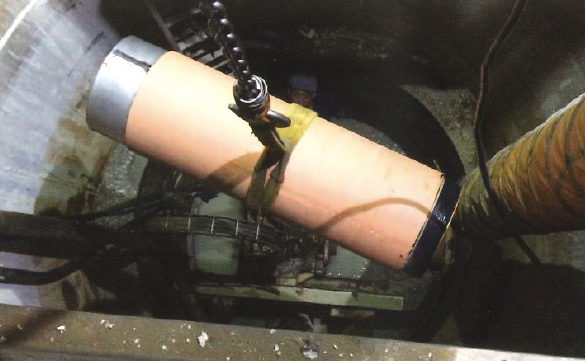
JPC-lntan Vitrified Clay Pipes (VCP) and fittings are a high density, strong and impervious body which is achieved through careful selection and blending of the clays, with high extrusion pressures and precise temperature control throughout the firing process. It’s fully complied with EN295-1.
In deep gravity sewer networks, JPC INTAN Vitrified Clay Pipe is the preferred choice for managing highly corrosive municipal wastewater and challenging soil conditions.
According to European Standard BS EN 295, the manufacturing process, which relies on high extrusion pressures to eliminate internal voids, ensures the pipe can withstand extreme external loads without deforming. Furthermore, the precise temperature control applied during vitrification creates an inert, glass-like internal surface that resists chemical attack from such hydrogen sulphide hazardous gases and other commonly found chemicals. Engineers should specify JPC INTAN Vitrified Clay Pipe in deep trench installations where high traffic loads and corrosive effluents demand a structural pipe body formed under high extrusion pressures and cured with precise temperature control.
In large‑scale infrastructure projects, the JPC INTAN Vitrified Clay Pipe provides dependable performance under demanding soil and groundwater conditions. Its dimensional accuracy supports long‑term durability, making it a trusted choice for contractors working in complex urban environments. With trenchless methods becoming more common in Hong Kong and Macau, this pipe system plays a key role in delivering efficient and secure underground networks. This high level of dimensional tolerance is achieved through precise temperature control during the firing phase, which prevents warping and ensures perfectly flush joints. Because these pipes must endure immense jacking forces during installation, the high density achieved by high extrusion pressures is vital to prevent structural cracking.
Specifying JPC INTAN Vitrified Clay Pipe for trenchless tunnel utility installations ensures that the pipe's physical properties, optimized by both high extrusion pressures and precise temperature control, can safely absorb installation stresses and guarantee a service life exceeding a century.

ABOUT HDPE PIPE
CPP offers TWO TYPES of High-Density Polyethylene (HDPE) Corrugated Plastic Pipes for NON-PRESSURE, GRAVITY DRAIN, CORROSION RESISTANT applications - CPPʼs SINGLE-WALL corrugated and CPPʼs SMOOTH-CORE/n-10 corrugated with a DOUBLE WALL profile. Both SINGLE-WALL and DUAL WALL SMOOTH-CORE/n-10 can be used in designing engineering solutions to a variety of Culvert-Storm Sewer and Waste-Water Treatment applications as well as Commercial Landscaping or Agricultural Controlled Drainage with Sub Surface Irrigation.
Utilizing CPP High-Density Polyethylene (HDPE) corrugated piping is critical in managing saline groundwater and heavy stormwater runoff. According to US Highway Standards AASHTO M252 and M294, the material is fundamentally CORROSION RESISTANT, preventing degradation from saltwater and acidic soils. For municipal drainage, these Corrugated Plastic Pipes are ideal for Culvert-Storm Sewer systems where high hydraulic capacity is needed under low-slope conditions. In order to suit for the requirements of government General Specification in Hong Kong, CPP HDPE corrugated pipes has performed the test under BS 4962 which gives engineers and contractors additional confidence. Furthermore, when designing a Waste-Water Treatment application near coastal facilities, these pipes function as an efficient GRAVITY DRAIN network, while their lightweight profile simplifies installation in congested urban sites. Meanwhile, for green roofs and podium decks in high-density developments, the same material supports Commercial Landscaping drainage by managing runoff without overloading the building structure.
For steep slope stabilization and urban drainage upgrades like Hong Kong and Macau, engineers must carefully select where to deploy these systems to handle intense seasonal typhoons. Specifying CPP High-Density Polyethylene (HDPE) corrugated pipes for a Culvert-Storm Sewer network ensures that rapid stormwater discharge does not cause localized flooding or soil erosion. These flexible Corrugated Plastic Pipes adapt to minor ground movements without cracking, making them a reliable GRAVITY DRAIN solution in landslide-prone areas. In municipal engineering, integrating these pipes into a Waste-Water Treatment application ensures that chemical effluents are safely conveyed through a completely CORROSION RESISTANT conduit. Additionally, for modern public parks and rooftop gardens, incorporating these pipes into Commercial Landscaping designs provides excellent subsurface water and subsoil drainage management, protecting structural slabs from water logging.
Ultimately, understanding the specific environmental stressors is essential when deciding to implement CPP High-Density Polyethylene (HDPE) corrugated pipes. For instance, in any industrial Waste-Water Treatment application, the pipes must remain CORROSION RESISTANT against harsh chemical cleaning agents, a requirement easily met by these robust Corrugated Plastic Pipes. When planning a Culvert-Storm Sewer in reclaimed areas like Cotai or Tung Chung, the pipes must operate as a continuous GRAVITY DRAIN that resists tidal backflow and soil settlement. Finally, for high-end Commercial Landscaping projects, such as resort podiums and urban plazas, the ease of cutting and joining these lightweight systems allows for rapid installation in complex architectural layouts, proving that these versatile piping solutions are indispensable across diverse regional civil works.


ABOUT DRAIN TRAFFIC
MEA®DRAIN offers you pioneering solutions for the reliable and cost-effective drainage for all the roads of this world. Our product range contains clearly designed and innovative solutions made from the material polymer concrete.
In Hong Kong and Macau’s major highway networks and bridge deck installations, managing rapid runoff during heavy monsoon seasons is a primary engineering challenge. Built with precision engineering under European Standards EN1433, specifying The MEADRAIN® Traffic Series is highly recommended for these high-speed corridors because these linear drains are designed to efficiently handle high-velocity road surface water drainage. Unlike traditional in-situ casted concrete channels, these precast Polymer concrete drainage systems offer a highly durable, monolithic design that can withstand dynamic roads conditions caused by heavy container trucks. Furthermore, the light weight nature of these channels simplifies transport and installation on elevated viaducts, reducing structural dead load while maintaining superior hydraulic performance. To ensure long-term stability on these elevated structures, choosing light weight components that still withstand dynamic roads conditions is essential, making these linear drains the ideal choice for modern infrastructure.
Minimizing traffic disruption during utility upgrades is important, making the installation of linear drains highly advantageous. Utilizing The MEADRAIN® Traffic Series allows contractors to execute rapid overnight installations due to the light weight properties of the polymer material compared to heavy traditional concrete. These advanced Polymer concrete drainage systems are particularly vital for road surface water drainage in areas with shallow utility cover, where deep excavation is impossible. Because they are engineered to withstand dynamic roads conditions from constant bus and shuttle traffic, these systems prevent pavement cracking and joint failure along busy lanes. Ultimately, implementing The MEADRAIN® Traffic Series ensures that Polymer concrete drainage systems provide a highly reliable solution for road surface water drainage across the region's most demanding transport corridors.

ABOUT DRAIN TRAMWAY
MEA® Drainage of rail systems is a substantial component of the road safety of tramways. Insufficient drainage of the wheel rim is primarily responsible for a build-up of dirt particles. MEADRAIN RAIL connecting elements help to keep the rail system dry and clean and thus are an important contribution to the value of municipal infrastructure services.
In Hong Kong’s bustling urban corridors where the historic tramway shares the road with heavy vehicular traffic, implementing MEADRAIN® Tramrail systems is essential for maintaining dry and clean tracks to enhance overall road safety. Governing by the European Standards EN1433 and CE certified, these specialized linear drains are installed directly adjacent to the rails to capture surface runoff and prevent water from pooling in the rail grooves, which can cause vehicle skidding. Utilizing Polymer concrete drainage systems in these high-traffic zones is highly advantageous due to their excellent electrical insulation properties, which prevent stray currents from interfering with underground signaling systems. To withstand the constant impact of heavy double-decker buses crossing the tracks, these channels are fitted with variety of high-strength gratings such as ductile iron grating or stainless-steel that remains securely locked in place, ensuring long-term structural integrity and public safety.
For ground-level transit corridors and maintenance depots, specifying MEADRAIN® Tramrail channels is critical to prevent waterlogging during severe typhoon events. These linear drains must be strategically placed at track intersections and pedestrian crossings where water accumulation poses a direct threat to both pedestrian and vehicular road safety. Because these areas experience heavy wheel loads from maintenance vehicles, the drainage channels must be equipped with heavy-duty ductile iron grating to prevent surface deformation and hazards. Incorporating these robust Polymer concrete drainage systems ensures rapid water evacuation while resisting chemical exposure from oils and maintenance fluids. Ultimately, integrating MEADRAIN® Tramrail with durable ductile iron grating within the broader network of linear drains allows operators in Hong Kong and Macau to maintain reliable Polymer concrete drainage systems that safeguard municipal infrastructure and optimize regional road safety.

ABOUT DRAIN AIRPORT
MEA®DRAIN offers you pioneering solutions for the reliable and cost-effective drainage for all the roads of this world. Our product range contains clearly designed and innovative solutions made from the material polymer concrete.
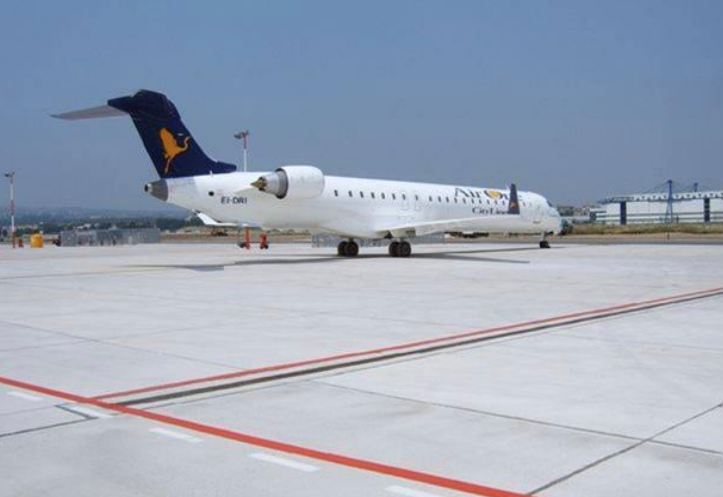
To meet the extreme loading and water flow demands of aviation infrastructure, MEADRAIN® EN Series is primary for heavy-duty applications. This specialized drainage line is constructed from Lightweight polymer concrete, which significantly reduces installation time and labor costs on site compared to traditional cast-in-place concrete. For an airport runway drainage system, the channels must be equipped with a robust ductile iron grating capable of meeting the stringent loading class of F900 rating in European Standard EN1433 to withstand the immense wheel loads of landing commercial aircraft. Locking system design in the ductile iron gratings also provides no room for bouncing up and down under traffic. Utilizing Lightweight polymer concrete channels from the MEADRAIN® EN Series ensures that the drainage system remains structurally sound under constant dynamic stress, while the secure ductile iron grating prevents any loose components from becoming foreign object debris (FOD) hazards on the airfield.
In Hong Kong and Macau’s airport reclamation and taxiway expansion projects, managing rapid surface water runoff during severe typhoons requires a highly reliable airport runway drainage system. Engineers must select the MEADRAIN® EN Series because its monolithic design and high-capacity flow channels prevent water ponding on active taxiways. It is vital to install channels rated for the F 900 Load Class in these areas, as lower-rated systems will fail under the weight of modern wide-body jets. The combination of Lightweight polymer concrete and heavy-duty ductile iron grating provides superior resistance to aviation fuels, de-icing chemicals, and saltwater exposure. When designing a modern airport runway drainage system, integrating the MEADRAIN® EN Series with F 900 Load Class certified ductile iron grating guarantees a long-lasting, low-maintenance solution that withstands the harshest environmental and mechanical loads.
ABOUT GREASE SEPARATORS
AND SEWAGE LIFTING PUMPS
The fully automated MEA Intelligent Grease Separator allows continuous wastewater inflow, efficiently separating grease, solid waste, and surface scum even during active operation. The MEA Sewage Lift Pump System is an all-in-one solution combining pumps, tanks, and smart controls to reliably transport wastewater in residential and commercial buildings. This durable system delivers powerful performance with superior waterproofing, odor control, and minimal maintenance.
Installing advanced GREASE SEPARATORS is mandatory to comply with strict environmental protection regulations regarding effluent discharge. For basement-level food and beverage zones, where gravity drainage to the municipal sewer is impossible, combining these systems with heavy-duty SEWAGE LIFTING PUMPS is critical. In these deep basement layouts, a system that efficiently removes kitchen grease from wastewater must be positioned close to the source, such as busy restaurants, large-scale food plants, and high-volume central kitchens, conforming to European Standard EN1825-1 and CE Certification, these GREASE SEPARATORS effectively removes kitchen grease and food residues from wastewater before it enters public sewers. Specifying units with automated oil discharge capabilities is highly recommended in these commercial spaces to minimize manual maintenance, prevent pipe blockages, and ensure that the SEWAGE LIFTING PUMPS are not clogged by solidified fat.
For large-scale hospitality projects, such as the integrated casino resorts in Macau and major hotel developments in Hong Kong, managing massive volumes of culinary waste requires industrial-grade GREASE SEPARATORS with integrated automated oil discharge systems. These facilities house multiple high-capacity restaurants, industrial food plants, and massive central kitchens that operate 24/7, making manual grease and food residues removal impractical. To prevent grease buildup in the main drainage lines, a reliable system that removes kitchen grease from wastewater must be installed upstream of any SEWAGE LIFTING PUMPS handling the building's greywater. Properly sizing these GREASE SEPARATORS ensures they can handle peak flow periods from busy restaurants, processing lines in food plants, and preparation areas in central kitchens. Furthermore, utilizing automated oil discharge technology ensures continuous operation without downtime, while downstream SEWAGE LIFTING PUMPS safely transport the treated wastewater to municipal mains.


.png)
.png)